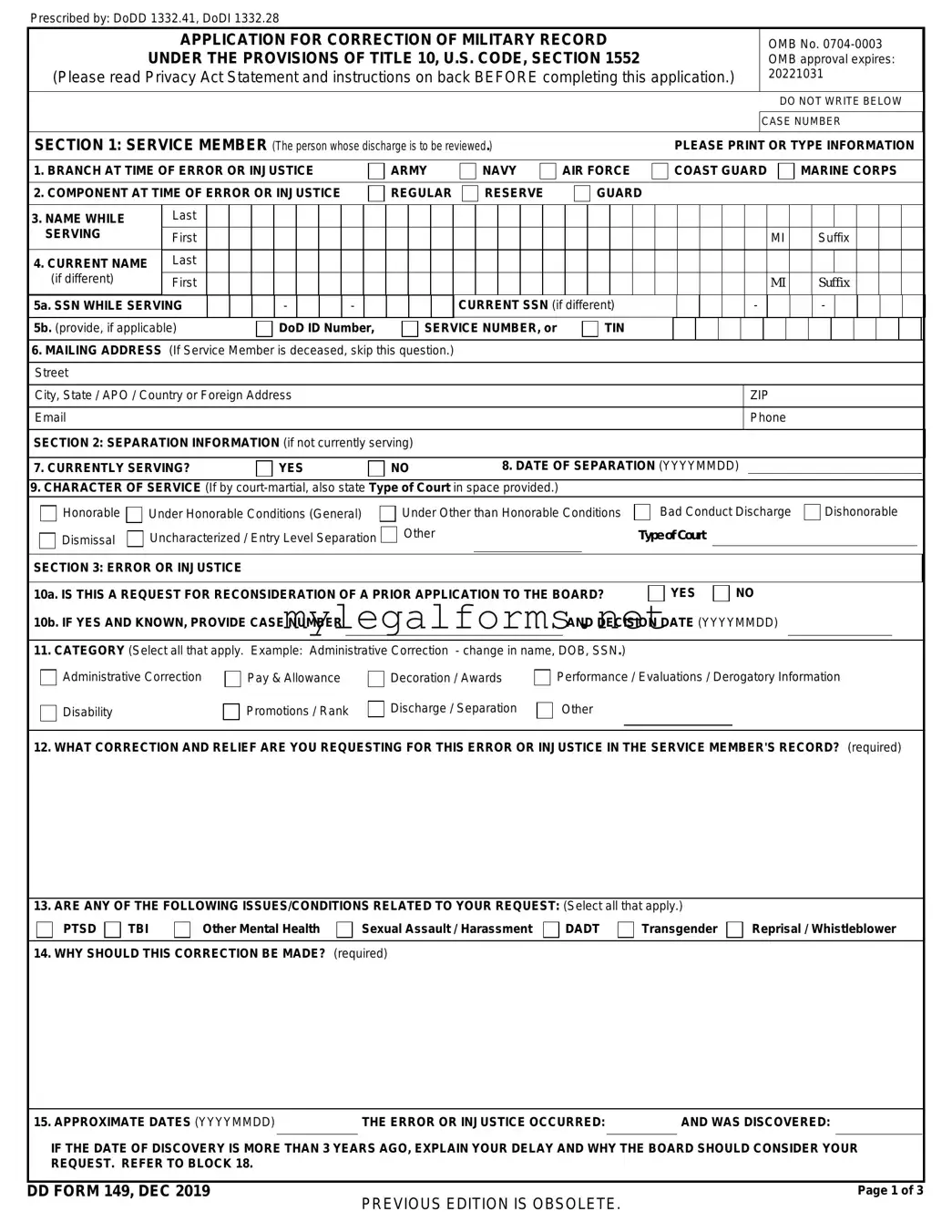
DD 149 Template
DD 149 Template
The DD 149 form, also known as the Application for Correction of Military Record, plays a crucial role for veterans seeking to amend their military records. This form is essential for those who believe that their records contain errors or injustices that need rectification. The process of submitting a DD 149 can be a vital step in ensuring that a veteran’s service is accurately represented, which can impact benefits, honors, and personal reputation. It serves as a formal request to the appropriate military board, allowing individuals to present their case for correction. Whether the issues pertain to discharge status, awards, or other significant details, the DD 149 provides a structured way for veterans to seek the changes they deserve. Understanding how to properly fill out this form, including what supporting documentation may be required, is critical for a successful application. The urgency of addressing discrepancies in military records cannot be overstated, as these inaccuracies can affect a veteran’s access to necessary benefits and recognition for their service.
Filling out and using the DD 149 form, which is the application for correction of military records, can be a straightforward process if you keep a few key points in mind. Here are ten important takeaways to consider:
By keeping these takeaways in mind, you can navigate the process of filling out and using the DD 149 form more effectively. Each step you take brings you closer to achieving the corrections you seek in your military records.
College Credits Expire After 7 Years - If you need assistance, don’t hesitate to reach out to the Registrar’s office.
Security Guard Report Example - Maintain accountability by requiring officer signatures at the end of each report.
For a thorough understanding of legal documentation, our guide on creating a Texas Promissory Note is invaluable. This resource outlines key aspects and considerations, ensuring that you navigate the form effectively. To explore this guide further, visit our page on the guidelines for a proper Promissory Note.
What Is a Nda Used for - The contract is designed to prevent conflicts and ensure fair treatment.
The DD 149 form is essential for veterans seeking to request a correction to their military records. However, it is often accompanied by other important documents that support the request and provide necessary context. Below is a list of additional forms and documents that are commonly used alongside the DD 149 form.
Gathering these documents can significantly enhance the chances of a successful request for correction. Each piece of information contributes to a clearer understanding of the veteran's circumstances and service history.
When filling out the DD 149 form, it's important to follow certain guidelines to ensure your application is processed smoothly. Here are nine things to keep in mind:
By following these guidelines, you can help ensure your DD 149 form is completed correctly and efficiently.
Filling out the DD 149 form can be a daunting task for many. This form is essential for veterans seeking to correct their military records. However, several common mistakes can hinder the process and lead to delays. Understanding these pitfalls can help ensure a smoother experience.
One frequent mistake is failing to provide complete information. The form requires specific details about the applicant and their military service. Omitting information, such as service dates or branch of service, can result in processing delays. It is crucial to double-check that all sections are filled out thoroughly.
Another common error is neglecting to sign and date the form. A signature is not just a formality; it confirms that the information provided is accurate. Without a signature, the form may be returned, causing unnecessary frustration. Always remember to sign and date the document before submission.
Many people also make the mistake of not including supporting documents. The DD 149 often requires additional evidence, such as discharge papers or medical records. Failing to attach these documents can lead to a denial of the request. It is advisable to review the requirements carefully and include all necessary paperwork.
Submitting the form to the wrong address is another mistake that can occur. Each branch of the military has specific instructions on where to send the DD 149. Ensuring the form reaches the correct destination is vital for timely processing. Check the guidelines provided for the appropriate mailing address.
Some individuals overlook the importance of keeping copies of everything submitted. After sending the DD 149, it is wise to retain a copy for personal records. This can be helpful if there are questions or if the form is lost in transit. Keeping organized records can simplify future communications.
Lastly, many applicants fail to follow up on their requests. After submitting the form, it is essential to monitor its status. If there is no response within a reasonable time frame, reaching out for updates can help. Staying proactive can prevent unnecessary delays and ensure that the request is being processed.
| Fact Name | Details |
|---|---|
| Purpose | The DD Form 149 is used by military members and veterans to apply for a change to their discharge status or to request correction of their military records. |
| Eligibility | Any individual who has served in the military and has received a discharge can submit this form to seek changes or corrections. |
| Submission Process | The completed form must be submitted to the appropriate military branch's Board for Correction of Military Records. |
| Supporting Documents | Applicants are encouraged to include any relevant documentation that supports their request, such as medical records or service records. |
| Governing Law | The process is governed by Title 10 of the United States Code, which outlines the rules for military personnel and their records. |
| Processing Time | Review and processing of the DD Form 149 can take several months, depending on the complexity of the request and the volume of applications received. |