Drug Screen Template
Drug Screen Template
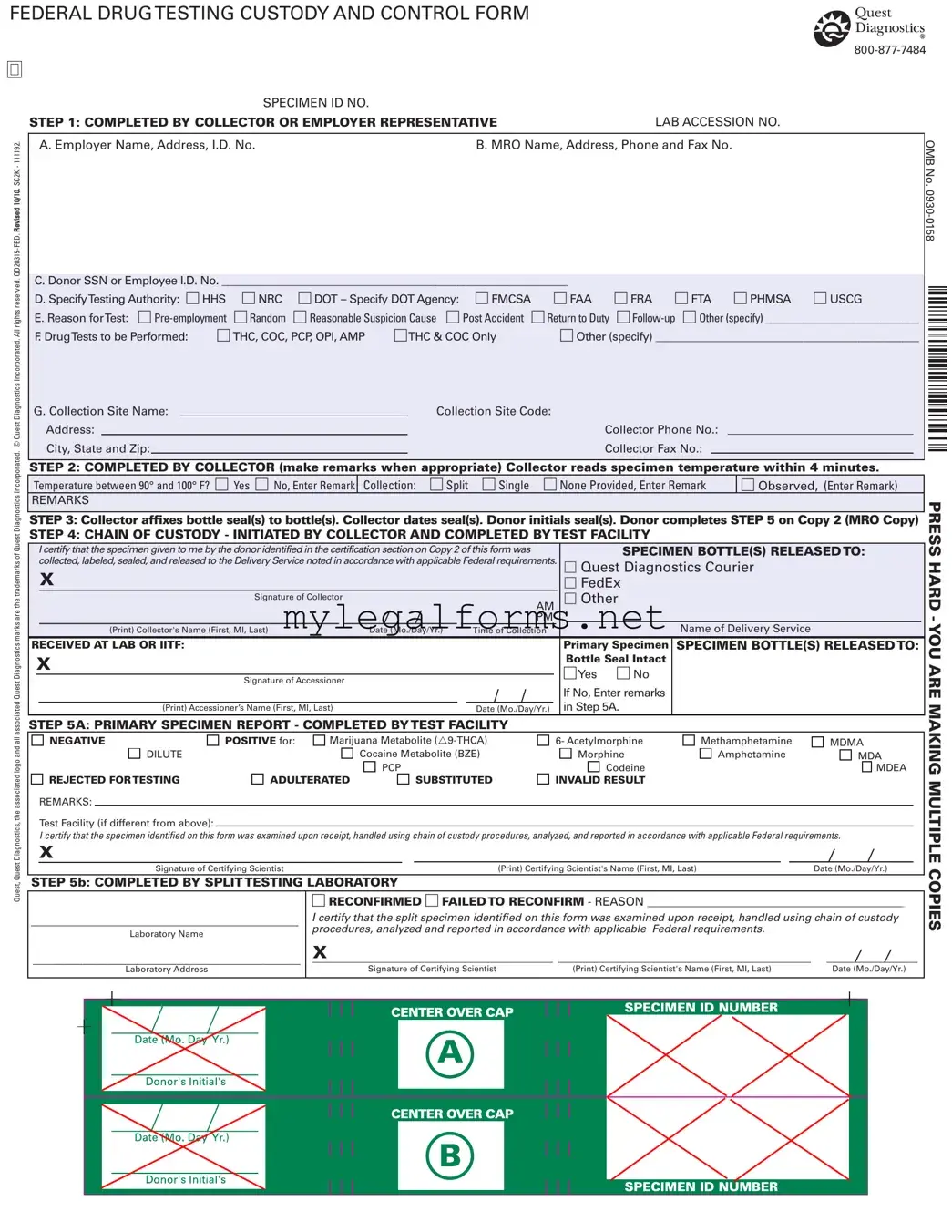
The Drug Screen form is a crucial document in the process of drug testing, particularly within the context of federal regulations. It serves multiple purposes and contains essential information that ensures the integrity of the testing process. At the outset, the form requires details about the employer and the medical review officer (MRO), including names, addresses, and contact information. Additionally, it captures the donor's identification through their Social Security Number or employee ID. The form also specifies the testing authority, which may include agencies like the Department of Transportation (DOT) or the Department of Health and Human Services (HHS). Furthermore, it outlines the reason for the test, whether it be pre-employment, random selection, or post-accident, among others. A critical section of the form details the specific drug tests to be performed, such as tests for THC, cocaine, or opiates. The collection site information is also included, providing the location and contact details for the collector. The form has several steps, each requiring careful completion by the collector, from checking the specimen's temperature to sealing the specimen bottle and maintaining a chain of custody. This meticulous process is designed to uphold the accuracy and reliability of the drug testing results, which can have significant implications for both employers and employees.
Filling out the Drug Screen form requires attention to detail. Here are some key takeaways to ensure accuracy and compliance:
Employee Advance Agreement - Address financial instability by requesting an advance on your pay.
When considering the transfer of ownership for a motorcycle, it’s vital to have a proper document. The official form for Motorcycle Bill of Sale requirements ensures both parties have a clear understanding of the transaction, serving as essential proof for the buyer and seller alike.
Living Will Registry - Your Advanced Health Care Directive remains valid as long as you are a California resident.
The Drug Screen form is an essential document in the drug testing process. It ensures that all necessary information is collected and recorded accurately. Along with this form, several other documents are often used to facilitate the testing and reporting process. Here’s a brief overview of those documents.
These documents work together to create a comprehensive framework for drug testing. Each plays a crucial role in ensuring that the process is fair, transparent, and compliant with regulations.
When filling out the Drug Screen form, it is crucial to follow certain guidelines to ensure accuracy and compliance. Here are eight important dos and don'ts to keep in mind:
By adhering to these guidelines, you can help ensure a smooth testing process and avoid potential complications. Remember, attention to detail is key.
Filling out the Drug Screen form accurately is crucial for ensuring a smooth testing process. However, individuals often make mistakes that can lead to delays or complications. One common error is failing to provide the correct identification number. This includes either the Social Security Number (SSN) or the Employee ID number. If this information is missing or incorrect, it can result in the test being misattributed or even invalidated.
Another frequent mistake involves not specifying the testing authority. The form requires the selection of an authority such as HHS, NRC, or DOT. Omitting this detail can create confusion about the testing requirements and potentially lead to non-compliance with federal regulations.
In addition, many people overlook the reason for the test. Whether it is for pre-employment, random, or post-accident purposes, this section must be completed accurately. Failure to specify the reason can raise questions about the legitimacy of the test and may complicate the results interpretation.
Another area where errors often occur is in the drug tests to be performed. Selecting the wrong tests or failing to indicate specific drugs can lead to incomplete results. For instance, if a test for THC is required but not indicated, the results may not reflect the necessary information.
People also sometimes forget to fill out the collector's information completely. This includes the collector's name, phone number, and other contact details. Incomplete information can hinder communication and may delay the processing of the test.
Moreover, the section regarding the temperature of the specimen is often mismanaged. The collector must read the temperature within four minutes of collection. If this step is neglected or not documented properly, it can lead to questions about the integrity of the specimen.
Lastly, not ensuring that the chain of custody is properly documented can be a significant mistake. This includes affixing the bottle seals and ensuring that all signatures are collected. Any lapse in this procedure can result in the test being deemed invalid or compromised.
| Fact Name | Description |
|---|---|
| Form Title | This is the Federal Drug Testing Custody and Control Form. |
| Contact Information | The form includes a contact number: 800-877-7484. |
| Employer Information | Sections A, B, and C require the employer's name, address, and donor's identification. |
| Testing Authority | Donors must specify the testing authority, which may include HHS, NRC, or DOT. |
| Reason for Testing | Common reasons include pre-employment, random testing, and post-accident evaluations. |
| Chain of Custody | The collector initiates the chain of custody, ensuring proper handling and documentation. |
| Results Reporting | Test results can indicate negative, positive, or invalid outcomes and must be certified by a scientist. |