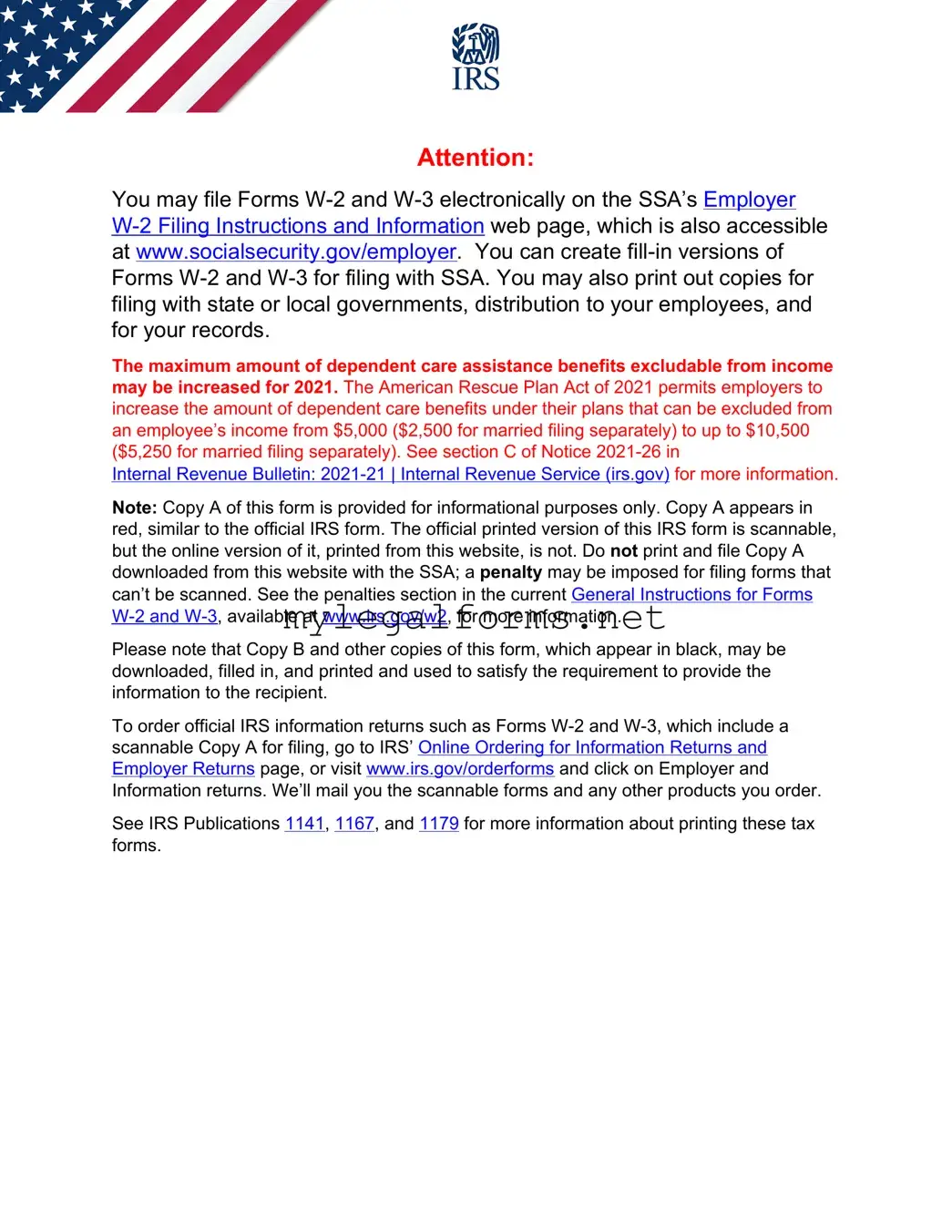
IRS W-3 Template
IRS W-3 Template
The IRS W-3 form plays a crucial role in the annual tax process for employers and the Internal Revenue Service. This form serves as a summary of all W-2 forms issued by an employer, providing a comprehensive overview of wages paid and taxes withheld for the year. Each year, employers must submit the W-3 along with the W-2 forms to report their employees' earnings and tax information accurately. The W-3 includes essential details such as the total number of W-2 forms being submitted, the total wages paid, and the total federal income tax withheld. By consolidating this information, the W-3 helps ensure that the IRS has a complete record of an employer's payroll activities. It also assists in the accurate processing of employees' tax returns. Understanding the importance of the W-3 form can help employers fulfill their reporting obligations and avoid potential penalties. With the right knowledge and preparation, navigating this requirement becomes a manageable task.
The IRS W-3 form is an important document for employers. It summarizes the total earnings, Social Security wages, and withholding for all employees.
Employee Status Change Form - Document any status changes related to employee retirements.
Roof Certification Form - The form must be dated and signed by an authorized representative of the roofing company.
The IRS W-3 form is a summary of all W-2 forms submitted by an employer. It serves as a transmittal form that consolidates the information reported on individual employee earnings and tax withholdings. Alongside the W-3, several other forms and documents are commonly utilized to ensure accurate reporting and compliance with tax obligations. Below is a list of these related documents.
Understanding these forms and documents is crucial for both employers and employees. Proper completion and submission of these forms help ensure compliance with tax regulations and contribute to a smooth tax filing process. Being informed about these related documents can ease the burden of tax season and promote financial well-being.
When completing the IRS W-3 form, it is essential to follow certain guidelines to ensure accuracy and compliance. Here are some important dos and don'ts:
Filling out the IRS W-3 form can be a straightforward task, but many people stumble along the way. One common mistake is failing to double-check the Employer Identification Number (EIN). This number is crucial for identifying your business. If it’s incorrect, it can lead to significant delays in processing your tax documents.
Another frequent error is not matching the names on the W-3 with those on the Social Security Administration records. Discrepancies can cause confusion and may result in penalties. Always ensure that the names are spelled correctly and correspond with the official documentation.
Many people overlook the importance of reporting accurate wages. The total wages reported on the W-3 must align with the amounts reported on the W-2 forms. If there are discrepancies, it could raise red flags with the IRS, leading to audits or additional inquiries.
Some individuals forget to sign and date the W-3 form. This might seem minor, but an unsigned form is considered invalid. It’s essential to remember that the signature verifies the accuracy of the information provided.
Another mistake is neglecting to include all necessary copies of the W-2 forms when submitting the W-3. The W-3 acts as a summary of the W-2 forms, so omitting any could lead to incomplete submissions, causing further complications.
People often miscalculate the total number of W-2 forms submitted. The W-3 requires an accurate count of all W-2 forms issued. An incorrect count can create confusion and may result in penalties.
Additionally, some individuals fail to keep copies of the W-3 and W-2 forms for their records. It’s vital to maintain these documents for future reference, especially in the event of an audit or if questions arise about the submitted information.
Lastly, many underestimate the importance of submitting the W-3 by the deadline. Late submissions can lead to fines and interest on any taxes owed. Staying organized and aware of deadlines can help avoid these unnecessary costs.
| Fact Name | Description |
|---|---|
| Purpose | The IRS W-3 form serves as a summary of all W-2 forms issued by an employer for a tax year. |
| Filing Requirement | Employers must file the W-3 form along with their W-2 forms to report total earnings, Social Security wages, and Medicare wages. |
| Deadline | The W-3 form must be submitted to the IRS by January 31st of the year following the tax year. |
| Who Files | Employers, including businesses and non-profits, are responsible for filing the W-3 form. |
| Electronic Filing | Employers can file the W-3 electronically through the IRS e-file system, which is encouraged for efficiency. |
| State Requirements | Some states require a similar form, such as the New York State Form NYS-45, governed by New York Tax Law. |
| Corrections | If errors are found after submission, employers must file a corrected W-3 form to amend the information. |
| Penalties | Failure to file the W-3 form on time may result in penalties imposed by the IRS. |
| Information Included | The W-3 form includes total wages paid, Social Security and Medicare taxes withheld, and the number of employees. |