Fedex Bill Of Lading Template
Fedex Bill Of Lading Template
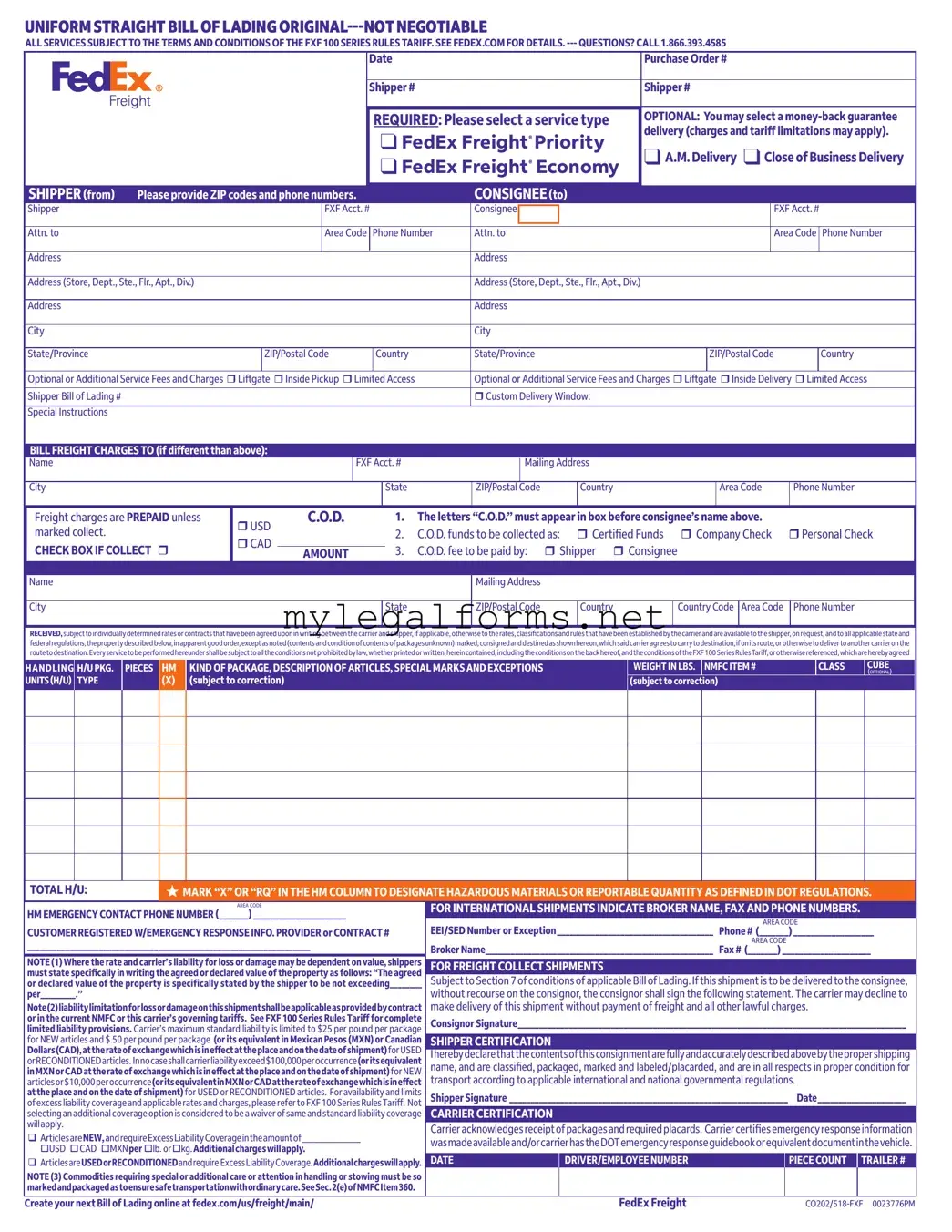
The FedEx Bill of Lading form is a critical document for the shipping process, serving as a receipt and a contract between the shipper and the carrier. This form outlines essential information such as the shipper's and consignee's details, service type selection, and any additional service fees. It includes options for different delivery services, such as FedEx Freight Priority and Economy, allowing shippers to choose based on urgency and budget. The form also facilitates the billing of freight charges, which can be prepaid or marked as collect, depending on the agreement between the parties involved. Furthermore, it addresses special handling instructions for hazardous materials and provides a section for the declaration of value, ensuring that both the shipper and carrier are aware of the shipment's worth and the associated liability limits. By detailing the responsibilities and conditions of transport, the FedEx Bill of Lading form helps to streamline the shipping process while ensuring compliance with applicable regulations. This comprehensive document serves as a safeguard for both shippers and carriers, providing clarity and accountability throughout the transportation of goods.
Filling out the FedEx Bill of Lading form correctly is essential for ensuring smooth shipping and delivery. Here are seven key takeaways to keep in mind:
By following these guidelines, you can help ensure that your shipping process is efficient and hassle-free.
W3 Tax Form - It assists employees in accurately reporting their income when filing tax returns.
Intent to Purchase Letter - Informs that any agreement is subject to a formal contract execution.
Seven Wishes Living Will - Filling out the Five Wishes document can inspire individuals to think about their legacy and how they wish to be remembered.
The FedEx Bill of Lading is a crucial document in the shipping process, serving as a receipt for the goods being transported. However, it is often accompanied by several other important forms and documents that help facilitate the shipping process, ensure compliance with regulations, and protect the interests of all parties involved. Below is a list of commonly used forms that complement the FedEx Bill of Lading.
Understanding these documents and their purposes can significantly enhance the shipping experience. Each form plays a vital role in ensuring that shipments are processed smoothly and comply with legal requirements. By being familiar with these documents, shippers can better navigate the complexities of logistics and transportation.
When filling out the FedEx Bill of Lading form, keep these important tips in mind:
Avoid these common mistakes:
Filling out the FedEx Bill of Lading form can seem straightforward, but several common mistakes can lead to delays or issues with your shipment. One frequent error occurs when individuals fail to include complete contact information for both the shipper and the consignee. This includes not only the names and addresses but also the ZIP codes and phone numbers. Omitting any of this information can result in significant delays in delivery, as the carrier may struggle to reach the right person for confirmation or additional details.
Another mistake often made is neglecting to select the appropriate service type. The form provides several options, such as FedEx Freight Priority or Economy, and choosing the wrong one can lead to unexpected charges or delivery times. It’s essential to review the service descriptions carefully and select the one that best meets your shipping needs. Additionally, skipping the optional money-back guarantee can leave you unprotected if the service does not meet your expectations.
Inaccuracies in the shipment details are also common. Many people forget to double-check the weight and dimensions of their packages. Providing incorrect measurements can affect the shipping cost and the handling of the package. The carrier may adjust the charges based on their own measurements, which could lead to additional fees after the fact. Always ensure that the weight and dimensions are accurate to avoid surprises.
Moreover, failing to indicate whether the shipment contains hazardous materials is a significant oversight. If your shipment includes such materials, it’s crucial to mark the appropriate box and provide detailed information. Not doing so could not only delay your shipment but also pose safety risks during transport. The carrier has specific regulations for hazardous materials, and compliance is mandatory.
Another common error involves the C.O.D. (Cash on Delivery) process. If you intend to collect payment upon delivery, it’s vital to clearly mark “C.O.D.” in the designated box and specify the amount. Some individuals forget to do this, leading to confusion and potential financial loss. Ensure that all C.O.D. details are correctly filled out to facilitate a smooth transaction.
Lastly, many shippers overlook the importance of signing the Bill of Lading. A signature is not just a formality; it confirms that the shipper agrees to the terms and conditions outlined in the document. Without a signature, the carrier may refuse to accept the shipment, which can cause unnecessary delays. Always remember to sign and date the form before submission.
| Fact Name | Description |
|---|---|
| Type of Bill | The FedEx Bill of Lading is a Uniform Straight Bill of Lading, which is not negotiable. |
| Governing Rules | All services are subject to the terms and conditions outlined in the FXF 100 Series Rules Tariff. |
| Service Options | Shippers can select from various service types, including FedEx Freight Priority and FedEx Freight Economy. |
| Freight Charges | Freight charges are generally prepaid unless specified otherwise, such as with C.O.D. shipments. |
| Liability Limits | Carrier liability is limited to $25 per pound for new articles and $0.50 per pound for used articles. |
| Emergency Contact | Shippers must provide emergency contact information for hazardous materials, as per DOT regulations. |